Our Team
Advisors who’ve been in the room where decisions are made — now working for you.

Law
Jordan
Senior Consultant
Jordan Holtzer helps law school applicants — especially those coming from non-traditional backgrounds or ...

CollegeMBAGraduate
Sarah
Senior Consultant
Sarah Rothschild finds the argument her clients walked in ready to bury. After twenty years and more than...

MedicalGraduate
Jason
Senior Consultant
Jason Fritzler has sat on admissions committees, built pre-health advising programs from scratch, and spe...
MBAMedicalGraduate
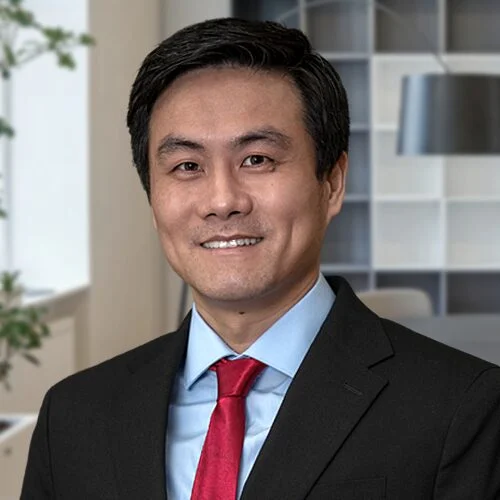
Yi
Senior Consultant
Yi Wang has a PhD from the University of Michigan, an MBA from Duke on a full-tuition scholarship, a mast...
LawGraduate
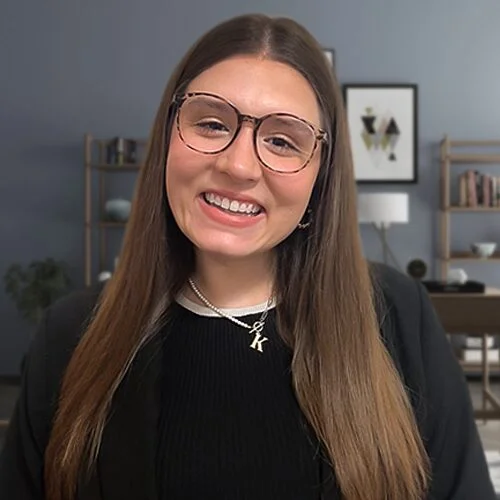
Katie
Senior Consultant
Katie didn't attend the law schools her clients are applying to — she works at one. As the Director of St...

Law
Janelle
Senior Consultant
Janelle McGregory is a licensed attorney and community organizer who advises law school applicants — espe...
Law
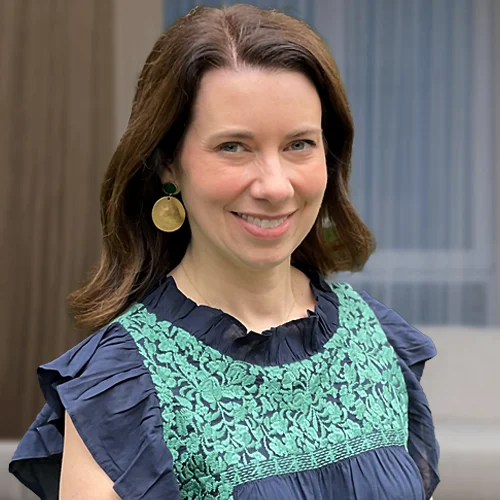
Virginia
Senior Consultant
Virginia Keehan spent nearly a decade running the admissions office at SMU Dedman School of Law — reading...

LawGraduate
Molly
Senior Consultant
Molly Oringer is a PhD candidate in Sociocultural Anthropology at UCLA whose academic work — on collectiv...
Frequently Asked Questions
The best people we can find — that’s the honest answer. We run cohort-based screening, which means we evaluate candidates in batches rather than rolling hires, and we only take the strongest from each group. The process includes blind reviews where multiple experienced members of our team assess a candidate’s actual work product with no résumé attached. No name, no alma mater, no professional background visible. We want to know: can this person diagnose a profile, identify the real strategic opportunity, and coach a student toward it? If the work doesn’t speak for itself on its own, the résumé won’t change our mind.
We hear from prospective consultants regularly — people evaluating firms the same way our clients do — that our process is unlike anything else in this industry. The consultants who make it through tend to share a specific quality: they can’t help but coach. It’s how they’re wired. They’re not here for the paycheck — they’re here because mentorship is the thing they’re genuinely best at and most energized by. That’s the quality we select for, and it’s the quality you’ll feel from your first conversation.
We don’t prioritize it, and here’s why — even though we completely understand the appeal. “This person sat on Stanford’s admissions committee! If anyone knows what they’re looking for, it’s them!” It makes intuitive sense. Who better than the gatekeeper?
But think about it this way. A food critic who’s reviewed hundreds of restaurants knows exactly what makes a great dining experience. That doesn’t make them a great chef. The skills are adjacent but fundamentally different — one evaluates, the other creates. A former admissions officer can tell you what they used to look for at one institution during the years they served. That’s a data point, and it can be useful. But the work of an admissions consultant isn’t to evaluate your application from behind a desk — it’s to sit across from a seventeen-year-old who doesn’t know their own story yet and help draw it out. To build strategy across twelve schools, not just the one where they used to work. To coach, not just judge.
We’ve worked with former deans. Some brought valuable perspectives. But we found the value of those insider insights to be temporary — useful as background knowledge, not as a consulting superpower. Meanwhile, the skills that actually move the needle — diagnostic instinct, emotional intelligence, the ability to adapt coaching style to very different personalities — those are things a former dean may or may not have. We’ll take a better consultant over a former dean of Harvard any day. The credential helps you make more sales. It doesn’t automatically produce better work or better outcomes for the people who matter most.
We look for coaching talent above everything else. It’s a plus if someone has personally navigated competitive admissions and understands the qualities that characterize people who earn spots at the world’s top institutions. But beyond that baseline, what we care about most is whether they can truly connect with and develop a student.
Here’s our honest view on experience: it’s overrated by itself. We’d rather have someone with natural instincts, genuine feel for the craft, and the kind of drive that makes everyone around them better — even if they’re newer to consulting — over a fifteen-year veteran who’s competent but has plateaued. Experience plus talent can be extraordinary. But talent alone, in the right environment, will outperform experience alone every single time. For us, coaching talent is the experience that matters most. Everything else — knowledge of specific schools, familiarity with application platforms, understanding of committee dynamics — can be learned quickly by someone who has the underlying gift. The gift itself can’t be taught.
This is one of the things we’re most proud of, because it’s genuinely rare. Most firms keep their consultants siloed. They protect company interests by keeping experts isolated from each other — partly out of fear that collaboration leads to people leaving, partly because their business model doesn’t reward knowledge-sharing. We take the opposite approach. We hire people who are genuinely invested in this work, and we trust them fully. We know that when talented, caring people share what they know with other talented people, only good things come from it.
Our consultants communicate with each other regularly — sharing observations, exchanging insights about specific schools, and pressure-testing strategic approaches for tricky cases. Think of it like a teaching hospital where the doctors actually talk to each other across specialties rather than guarding their department’s turf. That spirit of combining expertise is built into everything we do. Shared resources, shared knowledge, shared culture. For our consultants, this is a real advantage — they get sharper by being part of a team that lifts each other up, not in spite of it. And for you, it means your consultant isn’t working alone. They have an entire brain trust behind them.
It starts and ends with how we hire. And honestly, this is where most firms fall short.
Here’s how we think about it. Imagine the highest-stakes client imaginable walks through the door — someone where the outcome matters to us personally, beyond just professionally. If we could only feel confident assigning that person to one or two consultants on our roster, then our standards aren’t high enough. The bar we hold ourselves to is this: we should be able to assign any consultant on our team to our most important client and feel completely confident they’re getting the best we have to offer. That isn’t aspirational language — it’s the actual standard we filter for. Every person on our team passed that test. If they hadn’t, they wouldn’t be here.
That’s what consistency actually looks like. Not a script everyone follows, but a level of talent and care that’s present in every person wearing our name.
Your lead consultant is both the architect and the builder. The same person who designs the narrative strategy — who decides what story your application needs to tell — is the one working with you at the sentence level to make the writing precise, compelling, and unmistakably yours.
That’s deliberate, and it’s the harder model to staff. Consultants who understand the game, and know how to set strategy are a dime a dozen, but often lack the patience and skill to deliver detailed feedback, iteration after iteration. Those who excel at the details game often miss the forest for the trees. Rare is the person who is a master of both. That rarefied breed is what defines the unique team at Admit Advantage.
Like any organization, we learned through our own early experience. On day one, we didn’t have a perfect system for identifying what made a consultant exceptional versus merely good. But we were intentional about figuring it out. Over time — through hundreds of engagements, honest post-cycle debriefs, and paying close attention to which clients had transformative experiences versus satisfactory ones — we identified the strongest signals. What to look for. What the desirable qualities actually are, both for the client’s experience and for the kind of people we want to work alongside.
More importantly, we got better at detecting those qualities before someone ever works a single case for us. The recruiting process we run today is the product of years of refinement — learning what predicts great performance, what looks promising on paper but doesn’t translate, and what the rare people who bring everything to this work actually look like from the start. When you get that filter right — when every person on the team earned their spot through a process that’s been tested across hundreds of hires — the feedback tends to confirm what we already know. Our clients tell us they’re in good hands. And when something isn’t working, we hear that too, quickly, because we’ve built the kind of relationship where families feel safe telling us the truth.